A color label can fit too many flags
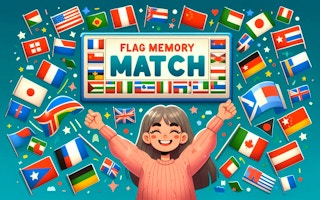
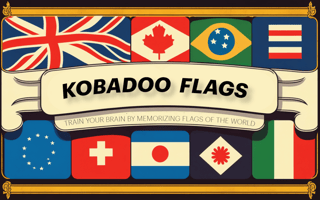
Calling a flag red-and-white is quick, but it may not distinguish it from several others in the same game. In Flag Memory Match and Kobadoo Flags, use the arrangement of those colors as well. Notice whether stripes are horizontal or vertical, whether a cross extends to the edges, and whether an emblem sits in the center or a corner. A precise visual label is useful even when you do not know the country name.
Choose the smallest distinctive description
You do not need a long account of every detail. Start with structure and add only the feature needed to separate similar images. A label like vertical bands with a center emblem carries more information than bright flag, while remaining short enough to rehearse. When two images remain easy to confuse, explicitly describe the difference between them. If one has a star and the other does not, that contrast is more useful than reciting both full color lists.
Attach the label to the right task
For a matching board, connect the description to a location. For a sequence challenge, connect it to an order. A perfect description without a position is not enough to select the correct hidden card; a known location does not preserve a multi-item sequence by itself. Before responding, rehearse the information the game actually asks you to use. Country names can replace visual labels when you know them confidently, but a guessed name may add confusion rather than reduce it.
A short practice exercise
Choose three flag pictures from a round and write a distinct label for each without looking up their names. Put the pictures away and reconstruct their defining features. Then check which feature you omitted or swapped. On the next round, emphasize that feature. Treat country-name learning as a separate follow-up if it interests you. The game is a useful prompt for observation, but a matching result alone does not demonstrate geography knowledge, and memorizing a few images should not be confused with understanding a country's history or culture.